-
by nursinghome
- 27/05/2026
- 0 Comments
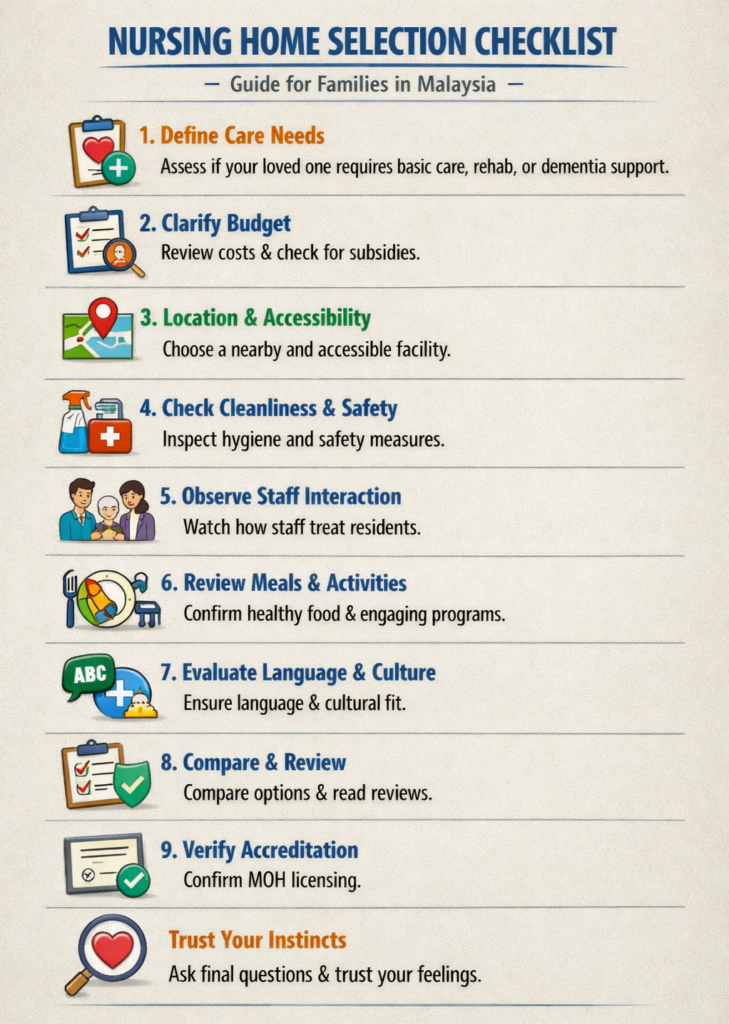
The first step for families is to define care needs clearly. Ask whether your loved one requires basic assistance, dementia care, or full medical supervision. This helps narrow down whether a facility with specialized units or rehabilitation services is necessary. Next, consider budget and cost transparency. Families should request a breakdown of monthly fees, extra charges, and whether subsidies or insurance apply.
Once financial clarity is established, focus on location and accessibility. A nursing home should be close enough for regular family visits and convenient for hospital transfers. During visits, observe cleanliness and safety standards — check for hygiene, emergency systems, and staff attentiveness. Equally important is staff interaction; watch how caregivers engage with residents, as warmth and respect are indicators of quality care.
Families should also evaluate meals and activities. Nutritious food, halal options, and engaging social programs contribute to residents’ well‑being. Don’t overlook language and cultural fit — in Malaysia’s diverse society, multilingual staff and prayer facilities can make elders feel truly at home. After visiting, take time to compare options systematically. Read online reviews, discuss impressions with siblings, and weigh costs against services.
Finally, trust both facts and instincts. Accreditation by the Ministry of Health ensures compliance, but families should also ask themselves: Did this place feel right? Before making a final decision, follow up with any remaining questions and confirm details in writing. By moving step by step — from care needs to cultural fit — families can choose a nursing home with confidence, ensuring safety, dignity, and comfort for their loved ones.